
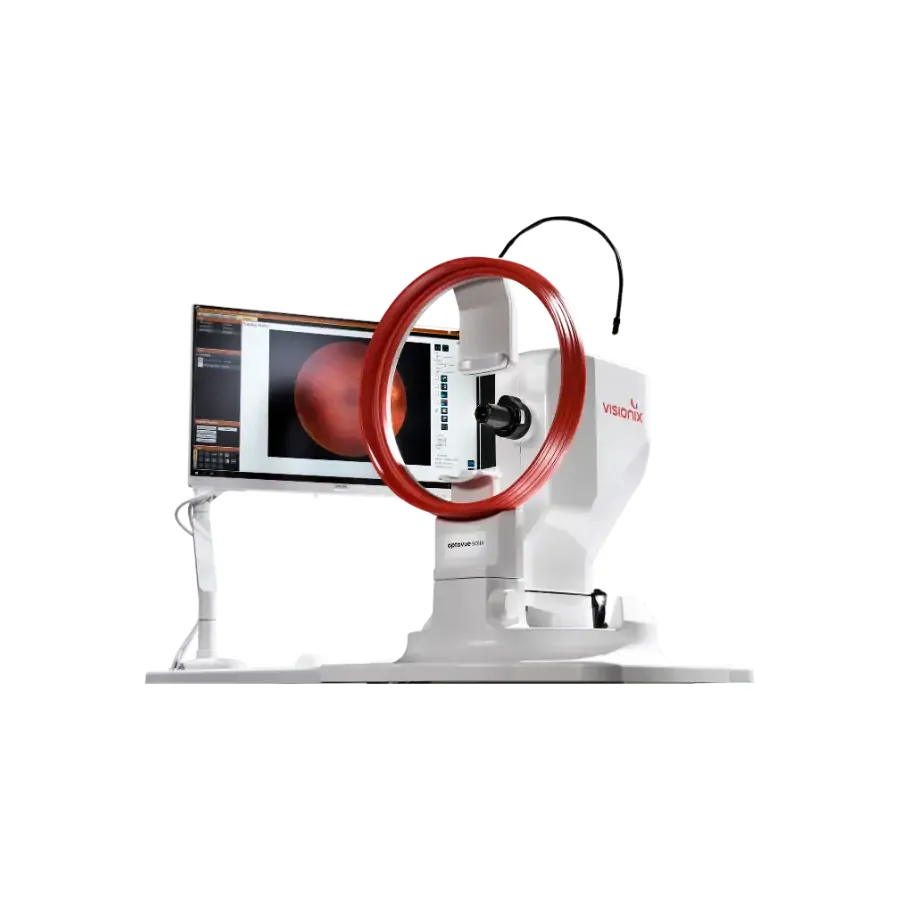
Optovue Solix OCT/OCT-A
The Solix is the top of Optovue's OCT line, and it is the one to look at when a practice does not want to choose between posterior and anterior segment work. It runs at 120,000 A-scans per second with FullRange imaging that captures the entire anterior chamber depth for angle analysis and corneal evaluation, alongside the retina and glaucoma scanning most practices buy an OCT for in the first place. AngioVue OCT angiography is FDA-cleared and produces vessel density metrics without dye. Optovue developed the platform; it is manufactured under the Visionix group, which is why you will see both names on the paperwork.
What it does
- 120,000 A-scans per second at 5 µm axial and 15 µm transverse resolution
- FullRange anterior segment imaging at 18 × 6.25 mm: the whole anterior chamber in a single scan
- FullRange retinal scan at 16 × 6.25 mm
- AngioVue OCT-A with AngioAnalytics metrics for retinal vasculature
- AngioVue QuadMontage combines four 9 × 9 mm scans for a widefield view of the peripheral retina
- DualTrac motion correction combines real-time tracking with post processing for 3D motion correction
- 10 mm corneal layer map with epithelial, stromal and total thickness
- Integrated 5 MP fundus camera and 940 nm external infrared imaging
- iWellness and AngioWellness screening protocols
- DICOM modality worklist and storage; NetVue Pro across up to 10 workstations
Is it right for your practice?
Best fit
Retina, glaucoma, cornea and comprehensive practices that want one OCT used across several disease states rather than a single-purpose platform.
Why consider it
120,000 A-scans per second at 5 µm axial resolution, with FullRange imaging covering the anterior chamber at 18 × 6.25 mm and the retina at 16 × 6.25 mm without switching modules. AngioVue OCT-A gives vessel density metrics without dye, and QuadMontage combines four 9 × 9 mm scans for a widefield view. DualTrac combines real-time tracking with post-processing for 3D motion correction.
What to compare
Most of the price difference against the Solix Essential is the extended FullRange anterior depth. If you are not doing angle analysis or IOL planning, the Essential runs the same 120K engine, the same OCT-A and the same segmentation for less. Note also that the integrated fundus camera needs a ≥4.0 mm pupil (≥3.3 mm in small pupil mode) even though the OCT works at ≥2.0 mm.
Ask me about
Whether your anterior segment work justifies FullRange, how many workstations you need under NetVue, and whether the Essential covers your case mix at a lower number.
Specifications
| Technology | Spectral Domain OCT (~840 nm) |
|---|---|
| Scan Speed | 120,000 A-scans/second |
| Axial Resolution | 5 µm (in tissue) |
| Transverse Resolution | 15 µm (in tissue) |
| Scan Depth | 3 mm standard / 6.25 mm FullRange |
| FullRange Anterior Scan | 18 × 6.25 mm (full anterior chamber) |
| FullRange Posterior Scan | Up to 16 × 6.25 mm |
| Imaging Modalities | Anterior OCT, posterior OCT, OCT-A, fundus photo, external photo, external IR |
| Connectivity | DICOM MWL & storage, NetVue Pro (up to 10 workstations) |
| Retina Scan Sizes | 3×3, 6.4×6.4, 9×9 and 12×12 mm |
| Disc Scan Size | 6×6 mm |
| AngioVue Montage | Two or four 9×9 mm scans (QuadMontage) |
| Scan Width | 3–16 mm; up to 6.25 mm depth in FullRange mode |
| Dioptric Range | −15D to +15D |
| OCT Pupil Size | ≥2.0 mm |
| Anterior Lateral Resolution | 18 µm regular CAM / 36 µm FullRange CAM |
| Anterior Scan Length | 2–18 mm |
| Fundus Camera | 5 MP, 45° field (35° in small pupil mode) |
| Fundus Pupil Size | ≥4.0 mm; ≥3.3 mm in small pupil mode |
| External IR Image | 940 nm illumination |
| Instrument Dimensions | 1072 × 600 × 610 mm (W × D × H) |
| Table Dimensions | 952 × 600 × 913 mm (W × D × H) |
Worth comparing
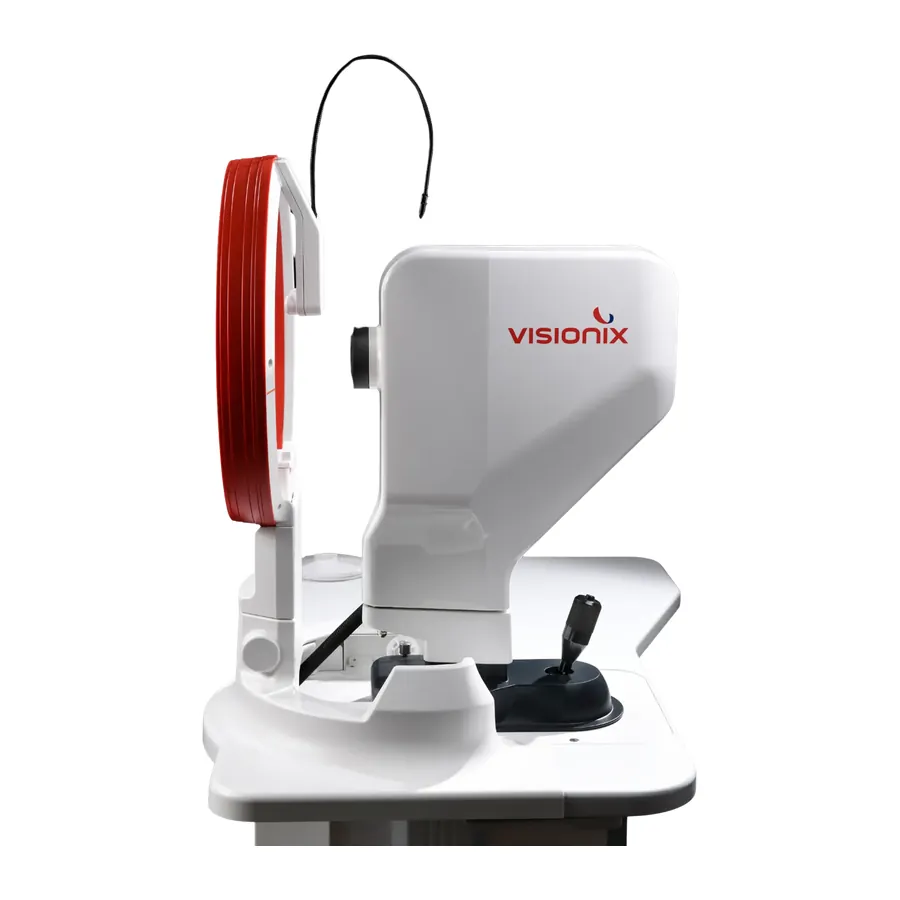
Optovue Solix Essential
The Solix engine at 120,000 A-scans per second with AngioVue OCTA and anterior segment imaging, without the full FullRange suite.
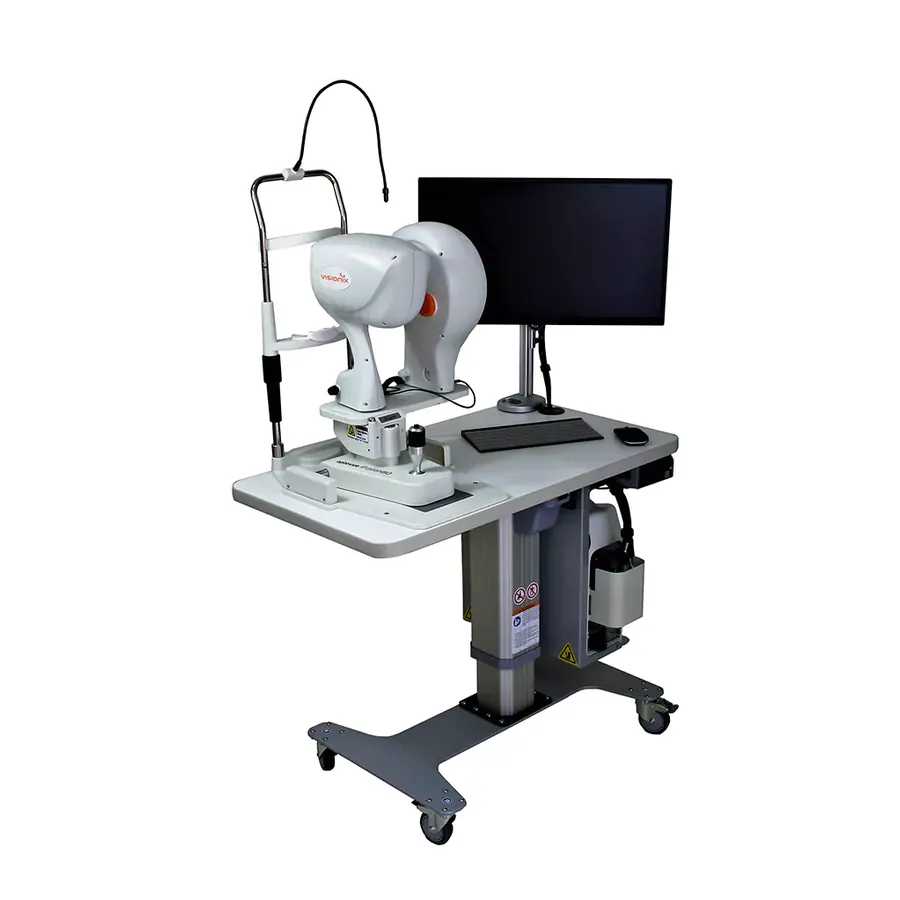
Optovue iFusion 80
The iVue 80 OCT and the iCam 12 retinal camera in one instrument, with OCT data overlaid on the 45-degree fundus photograph.
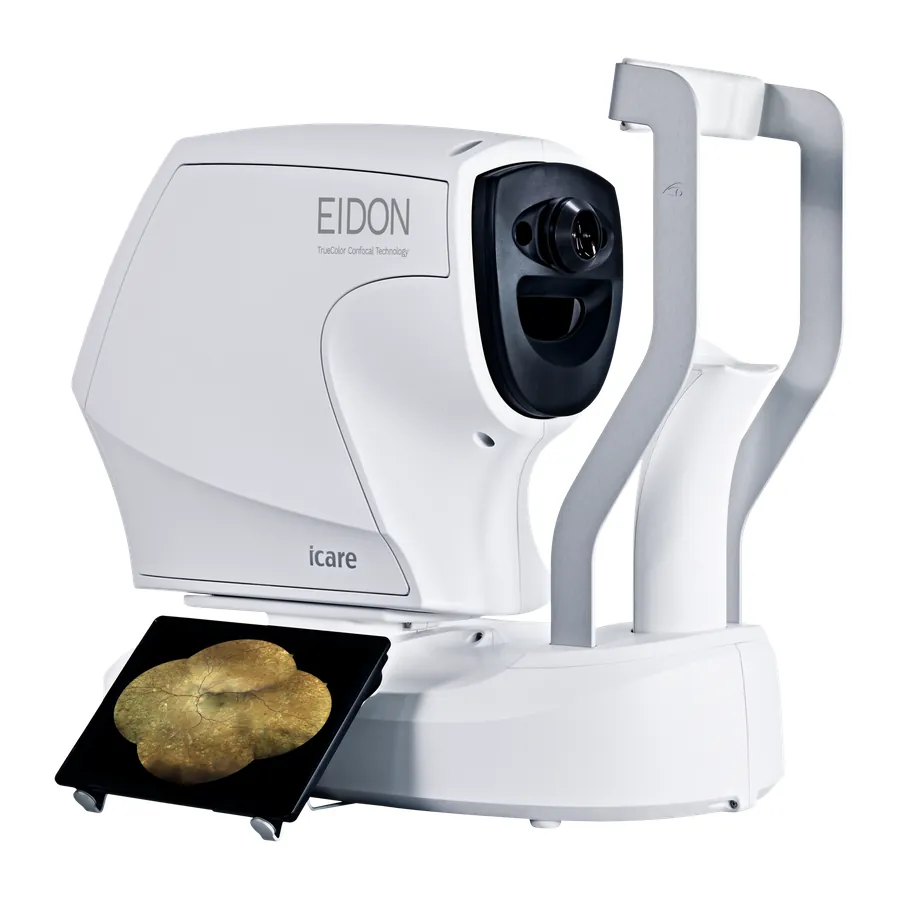
iCare EIDON UWF Retinal Imaging
TrueColor confocal retinal imaging, with the Ultra-Widefield Module reaching up to 200 degrees from the posterior pole to the periphery.
Specifications reviewed: 2026-09-05
Manufacturer source:
Optovue and Visionix: Optovue Solix OCT/OCT-A.
Configurations and specifications change. Ask me to confirm before ordering.
Talk it through with me
Tell me how your practice handles this now and what you want it to do, and we can work through the options together. You do not need to have settled on a product first.