
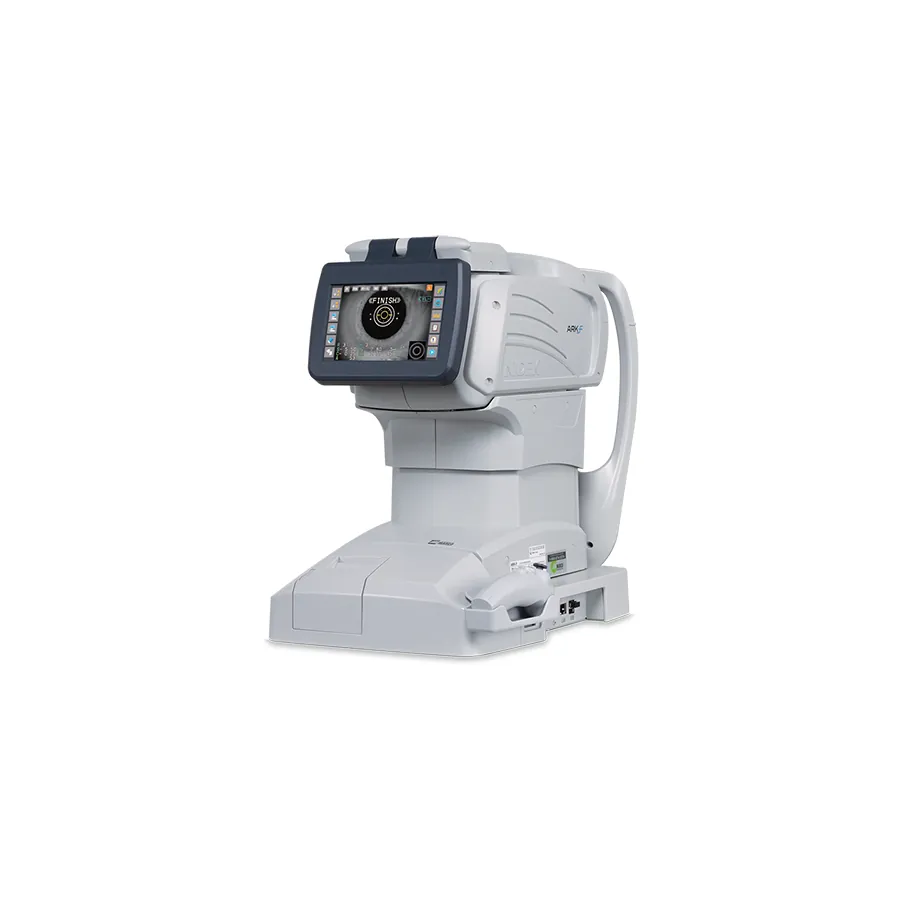
ARK-F Autorefractor/Keratometer
Fully automatic, with voice guidance for staff and patients
The ARK-F is the fully automatic member of the family. It detects the eye, adjusts the chinrest and transitions between eyes on its own, with voice guidance for both the technician and the patient. Same Super Luminescent Diode optics as the ARK-1 series, so the same accuracy through cataracts, with far less for the operator to do.
What it does
- Automatic eye detection and chinrest adjustment
- Automatic transition between eyes
- Voice command guidance for staff and patients
- Super Luminescent Diode source for sharper images than LED
- Accurate data through many cataracts
- Full X-Y-Z eye tracking for alignment and focus
- Large pupil zone imaging method
Is it right for your practice?
Best fit
Practices with high pre-test volume, rotating or newer technicians, or a persistent staffing problem.
Why consider it
Automation in pre-test is really about removing the variability between your best technician and your newest one. The ARK-F detects the eye, adjusts the chinrest, transitions between eyes on its own and talks the patient through it with voice guidance, so the result is the same regardless of who is running it. Same Super Luminescent Diode optics as the ARK-1 series, so the same performance through cataracts.
What to compare
The optical accuracy is identical to the ARK-1 series - what you are paying for is the automation layer. If you have two experienced technicians who have been with you for years and are not going anywhere, the added automation may not justify its cost, and the ARK-1s does the same measurement for less. The ARK-F's case is training time and turnover, not image quality.
Ask me about
What your technician turnover has looked like over the last few years, and how long it currently takes to bring a new hire up to reliable pre-test.
Specifications
| Objective Spherical Refractive Error | -30.00 to +25.00 D (VD = 12 mm) (0.01/0.12/0.25 D increments) |
|---|---|
| Cylindrical Refractive Error | 0 to ±12.00 D (0.01/0.12/0.25 D increments) |
| Cylinder Axis | 0 to 180° (1°/5° increments) |
| Minimum Measurable Pupil Diameter | ø2 mm |
| Corneal Curvature Radius | 5.00 to 13.00 mm (0.01 mm increments) |
| Corneal Refractive Power | 25.96 to 67.50 D (n = 1.3375) (0.01/0.12/0.25 D increments) |
| Corneal Cylindrical Power | 0 to ±12.00 D (0.01/0.12/0.25 D increments) |
| Corneal Cylinder Axis | 0 to 180° (1°/5° increments) |
| Pupillary Distance Measurement | 30 to 85 mm (1 mm increments) (Near point PD: 28 to 80 mm at WD = 40 cm) |
| Corneal Size Measurement | 1.0 to 14.0 mm (0.1 mm increments) |
| Pupil Size Measurement | 1.0 to 10.0 mm (0.1 mm increments) |
| Accommodation Measurement | 0 to 10.00 D (0.01/0.12/0.25 D increments) |
| Retro Illumination Image | Standard |
| Vision Comparison | Available with scenery chart |
| Auto Tracking | Fully automatic 3D tracking (X-Y-Z directions) |
| Power Supply | AC 100 to 240 V, 50/60 Hz |
| Power Consumption | 100 VA |
| Measurements | 305 (W) x 492 (D) x 488 (H) mm / 12.0 (W) x 19.4 (D) x 19.2 (H)” |
| Mass | 20 kg / 44 lbs. |
Worth comparing
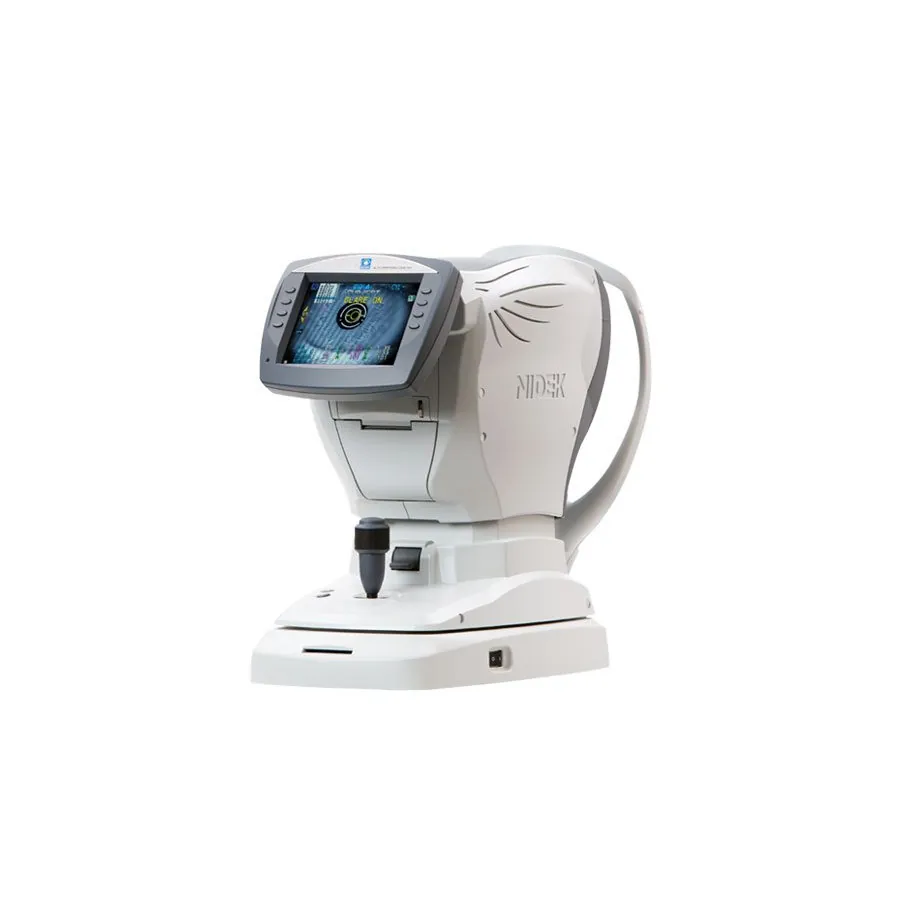
ARK-1 Series Autorefractor/Keratometers
Three tiers of autorefractor/keratometer. The 1a is built to measure through media opacities and across small and large pupils.
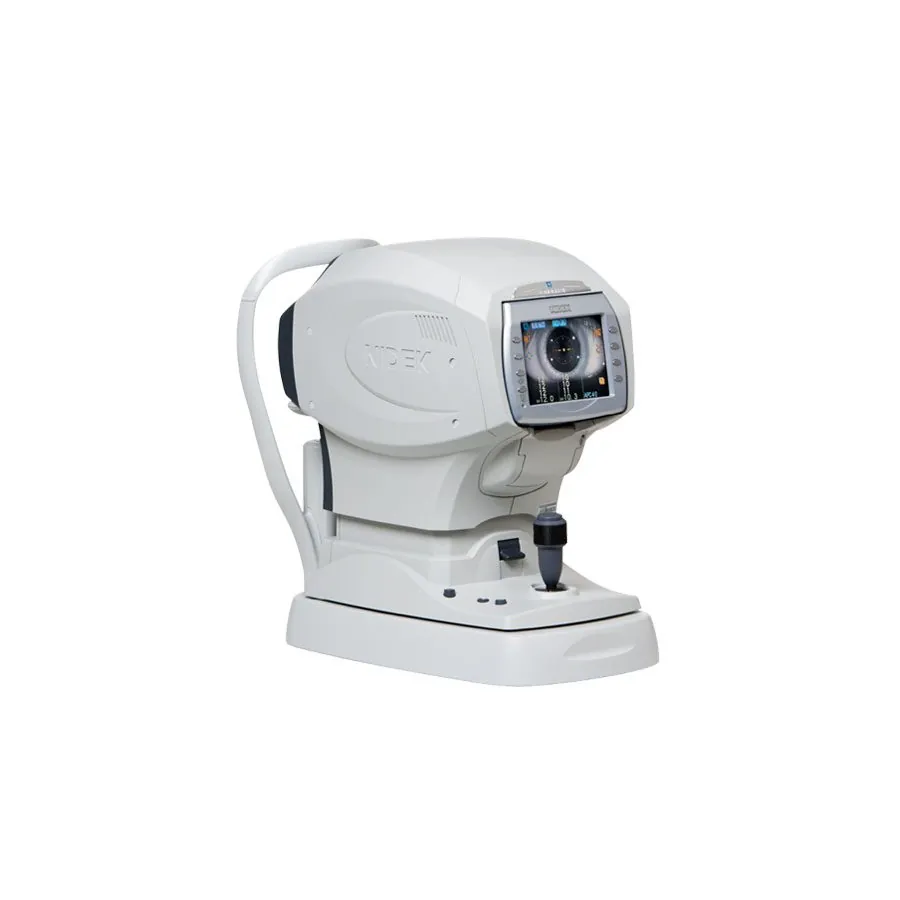
Tonoref II ARK with Tonometry
Autorefractor, keratometer and non-contact tonometer in a single instrument, for pretest rooms short on floor space.
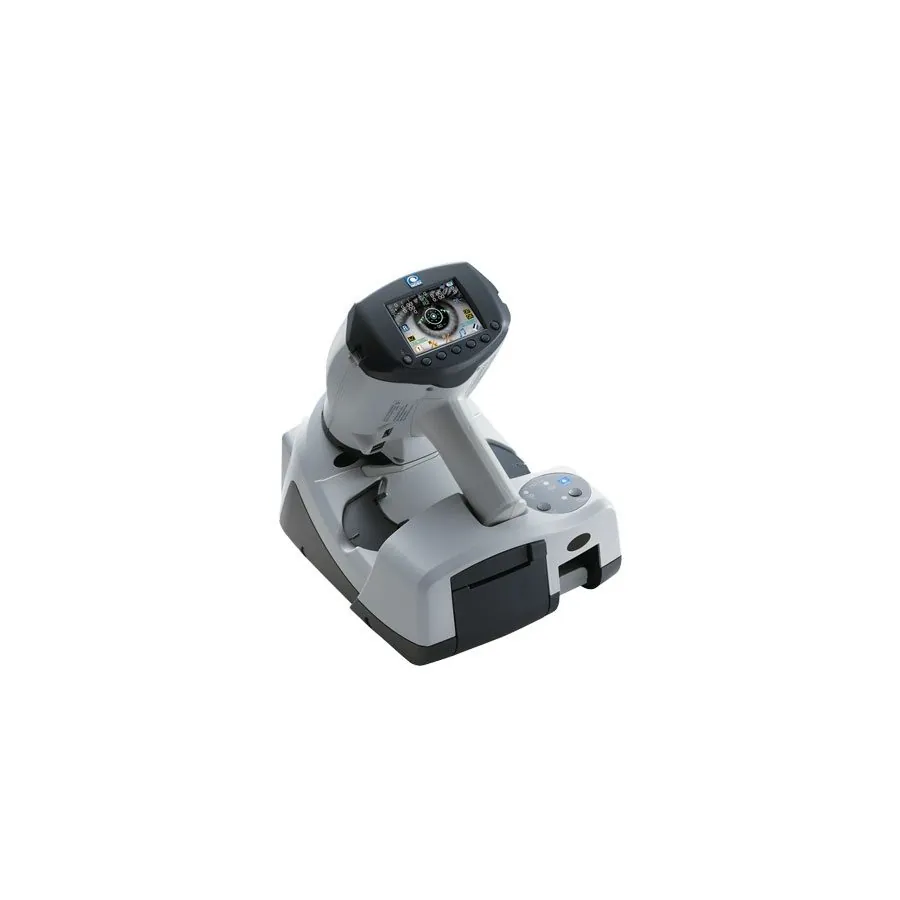
HandyRef-K Portable ARK
Handheld refraction and keratometry, for chairside, bedside, school screening and any patient who cannot reach a table-mounted instrument.
Specifications reviewed: 2026-09-06
Manufacturer source:
Marco: ARK-F Autorefractor/Keratometer.
Configurations and specifications change. Ask me to confirm before ordering.
Talk it through with me
Tell me how your practice handles this now and what you want it to do, and we can work through the options together. You do not need to have settled on a product first.